



Can You 3D Print Injection Molds — and When Should You?
A mold in two days instead of two weeks sounds like a trick question, but for the right part it is exactly what a printed tool delivers. We run industrial 3D printing and injection molding on the same floor, so the question lands on our desk weekly — here is the honest decision framework we use.
Yes — 3D printed injection molds work for short prototype runs of roughly 10–100 shots in unfilled plastics, cut in days. For anything beyond that, aluminum tooling wins on cost per part, surface finish and dimensional stability.
In this guide: how printed molds are made, where they genuinely win, the failure modes nobody puts in the brochure, and the crossover math from printed to aluminum tooling.
How Does a 3D Printed Injection Mold Work?
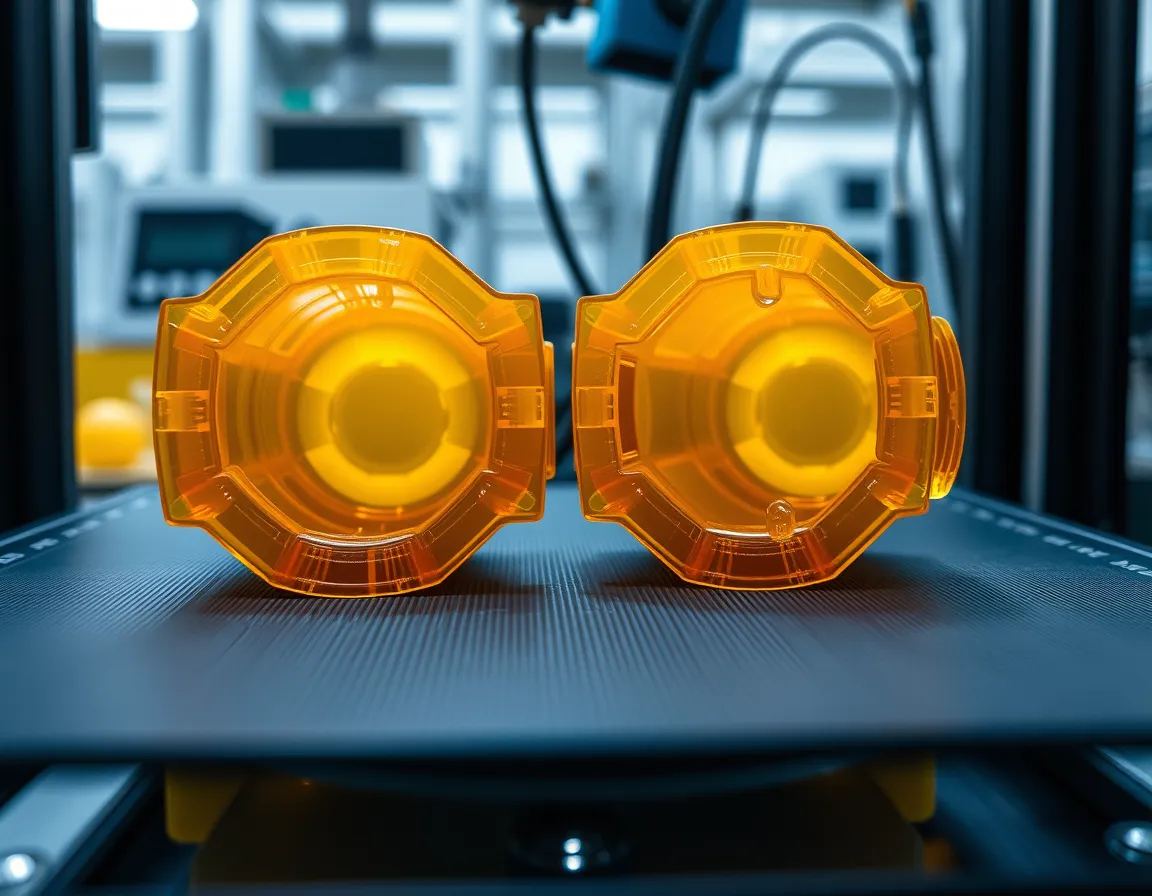
A printed mold skips machining entirely. The tool halves are printed in a high-temperature photopolymer on an industrial SLA platform, post-cured, finished lightly and mounted in a standard injection molding press.
The build follows the same logic as any mold. Part geometry, gate location, vents and ejection all have to be designed in before printing; a printed tool with a bad gate plan fails exactly like a machined one. What changes is the lead time and the material budget: a printed pair of inserts can be ready in a day or two of printing plus finishing, against days of milling for aluminum.
Surface finish is the first visible difference. Printed tools carry fine layer texture into the part unless the mold faces are post-finished, and the photopolymer conducts heat differently from metal, so cycle times run longer. For geometry validation those are acceptable trades; for cosmetic parts they rarely are.
When Do Printed Molds Actually Win?
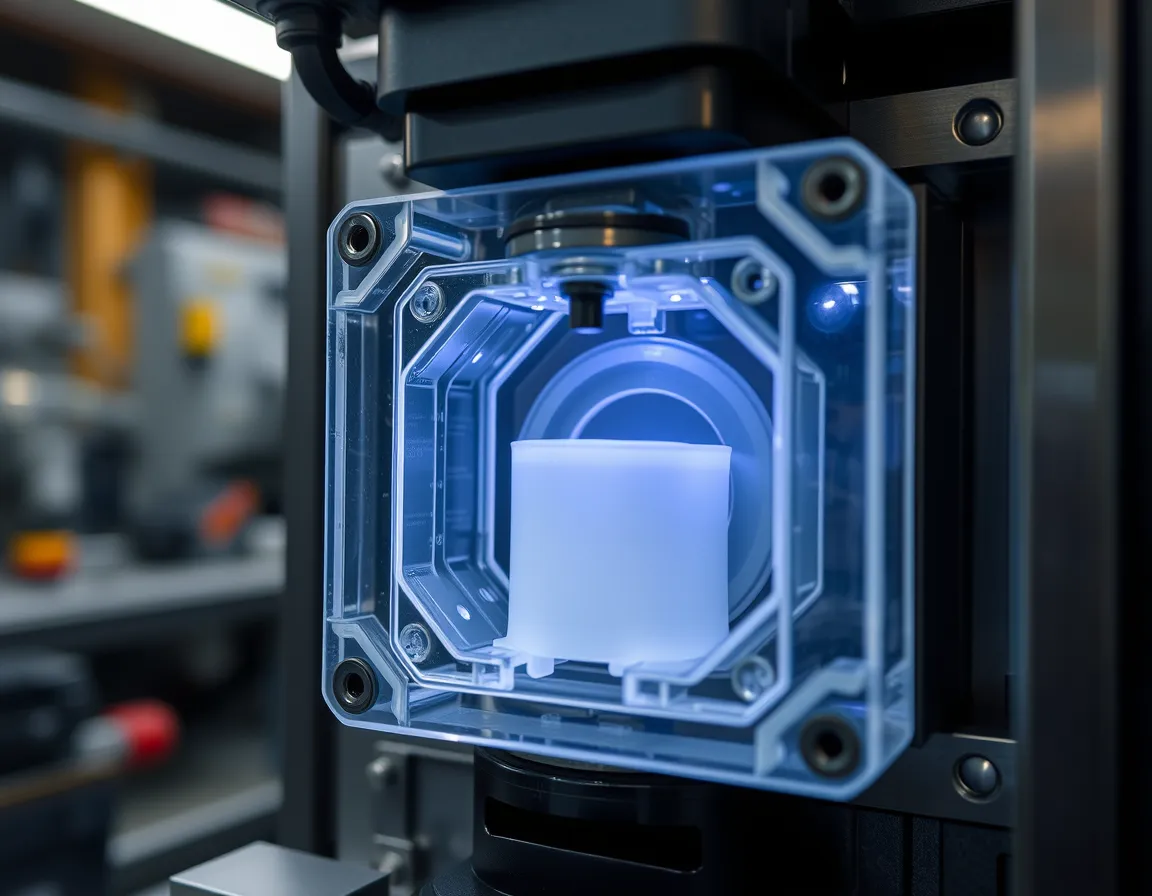
Three situations, and they are narrow ones:
Very early design iterations. When a team needs 20 parts of a snap-fit enclosure to test assembly this week, a printed tool delivers parts in the real molding process — real injection pressure, real material — while the design is still moving.
Materials testing on real geometry. Molding a few dozen test coupons in the actual production plastic catches shrinkage and warping issues that a printed replica in a different material never will.
Bridge tooling while aluminum is cut. A printed tool can cover a demo or a trade-show batch while the aluminum rapid tool is still in the machine shop.
The pattern in all three: the part count is small, the deadline is tight, and the part is functional rather than cosmetic. Printed molds buy speed, not durability.
What Are the Limits of 3D Printed Molds?
The limits are physical, and they arrive quickly:
Shot life. Photopolymer tools degrade under injection pressure and thermal cycling; mold inserts are typically serviceable for tens of shots, sometimes around a hundred in unfilled plastics with conservative processing.
Materials. Filled and glass-reinforced plastics are abrasive and eat printed cavities; high-melt-temperature engineering plastics exceed what photopolymer tools tolerate. Unfilled PP, PE, PS and ABS-class materials are the realistic working set.
Pressure and clamping. Printed tools restrict injection pressure, which limits flow-length-to-wall-thickness ratios — thin, long-flow parts are the first to short-shot.
Finish and tolerances. Molded-part surface follows the tool surface; dimensional drift grows as the tool wears within its short life.
None of these are reasons to avoid printed molds; they are the boundary of the map. Past it, aluminum is simply the correct tool material.
Printed vs Aluminum Tooling: Which One Should You Order?
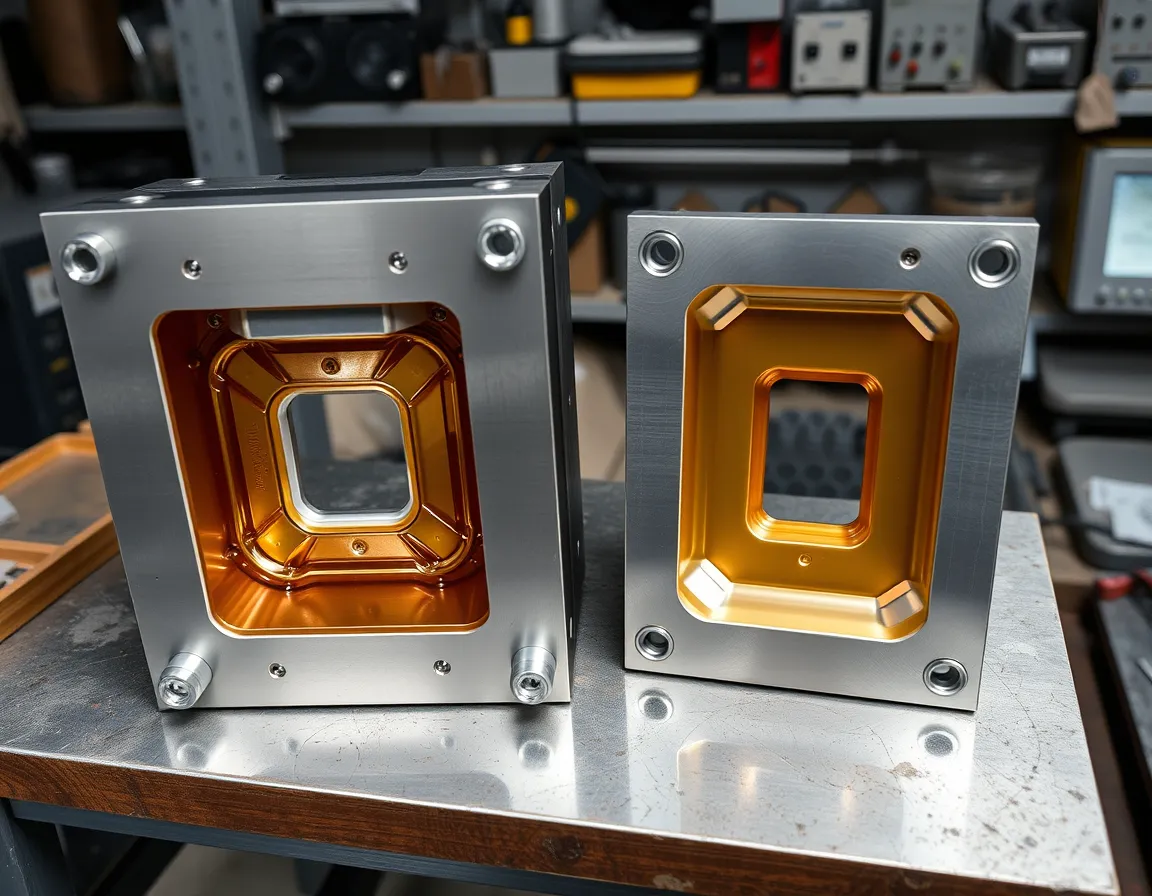
This is the question our engineers answer with numbers rather than preferences. As a framework:
| Feature | Capability |
|---|---|
| Tool lead time | Days · Days — CNC-cut 7075 aluminum tooling in as fast as 3 days |
| Shot life | Tens of shots, ~100 in favorable cases · Sized to 50–2,000-part validation batches |
| Part materials | Unfilled plastics · Standard injection range for validation batches |
| Surface finish | Tool texture carries into parts · Machined finish |
| Best use | 10–100 part iterations · 50–2,000 part validation batches |
The row that surprises people is the first one: aluminum rapid tooling no longer means weeks. A CNC-cut aluminum tool ready in about three days closes most of the speed gap that made printed molds attractive, while keeping the wider material range and the longer tool life. That is why aluminum tooling is the standard we quote for 50–2,000 part validation runs on all-electric presses — see the rapid tooling service page for the full capability list.
How Do You Decide for Your Part?
Bring the part, not the process preference. When a request for quote arrives, the decision comes down to four inputs: shot count, plastic, cosmetics and deadline. In practice:
Need under ~50 parts, unfilled plastic, functional finish, this week? A printed tool can be worth exploring.
Need 50–2,000 parts, real material data or a cosmetic surface? Aluminum rapid tooling, quoted in 24 hours with tooling in as fast as 3 days.
Somewhere between? Send the STEP file; an engineer replies within 24 hours with an aluminum rapid-tooling quote and a recommendation with the reasoning shown.
Whichever tool makes your parts, the inspection discipline stays the same from first shot to final box: critical dimensions measured and reported with every shipment, so the first batch tells you whether the tool and the part are ready for the next stage.
Conclusion
Printed molds win the first 100 parts; aluminum tooling wins everything after — and at 3-day aluminum, the crossover arrives earlier than most teams expect.
About Arterki
Engineering-grade parts with proof. Arterki Manufacturing runs CNC machining, industrial 3D printing (SLA/SLS/FDM/SLM), rapid tooling & injection molding, metal injection molding and LSR liquid silicone molding from one floor — every shipment carries a dimensional inspection report. Get a 24-hour quote.
Get a quote for your mold.
Send a STEP file with quantities and the dimensions you consider critical. An engineer replies within 24 hours with an aluminum rapid-tooling quote and the tolerances we will inspect to.
One-stop prototype & low-volume build · Inspection report with every part · Quote in 24 h