



Machined Acrylic (PMMA): Clear CNC Parts for Windows and Light Guides
Acrylic is what you specify when clarity is the feature — light guides, display windows, lens prototypes, parts whose whole job is being looked through. We machine PMMA on the same platforms as our metals, and every shipment carries a dimensional inspection report for the dimensions you mark critical.
Quick answer: Arterki CNC machines PMMA acrylic to ±0.05 mm standard tolerance (±0.02 mm on request, metrology-confirmed), in prototype and low-volume quantities. Lead time confirmed at quotation, quotes within 24 hours, inspection report with every shipment.
PMMA at Arterki: Machined in-house on 3- and 5-axis platforms with turn-mill for domes and lenses. ±0.05 mm standard. Clarity-critical faces quoted with the finishing route; inspection report in every box.
What is machined acrylic used for?
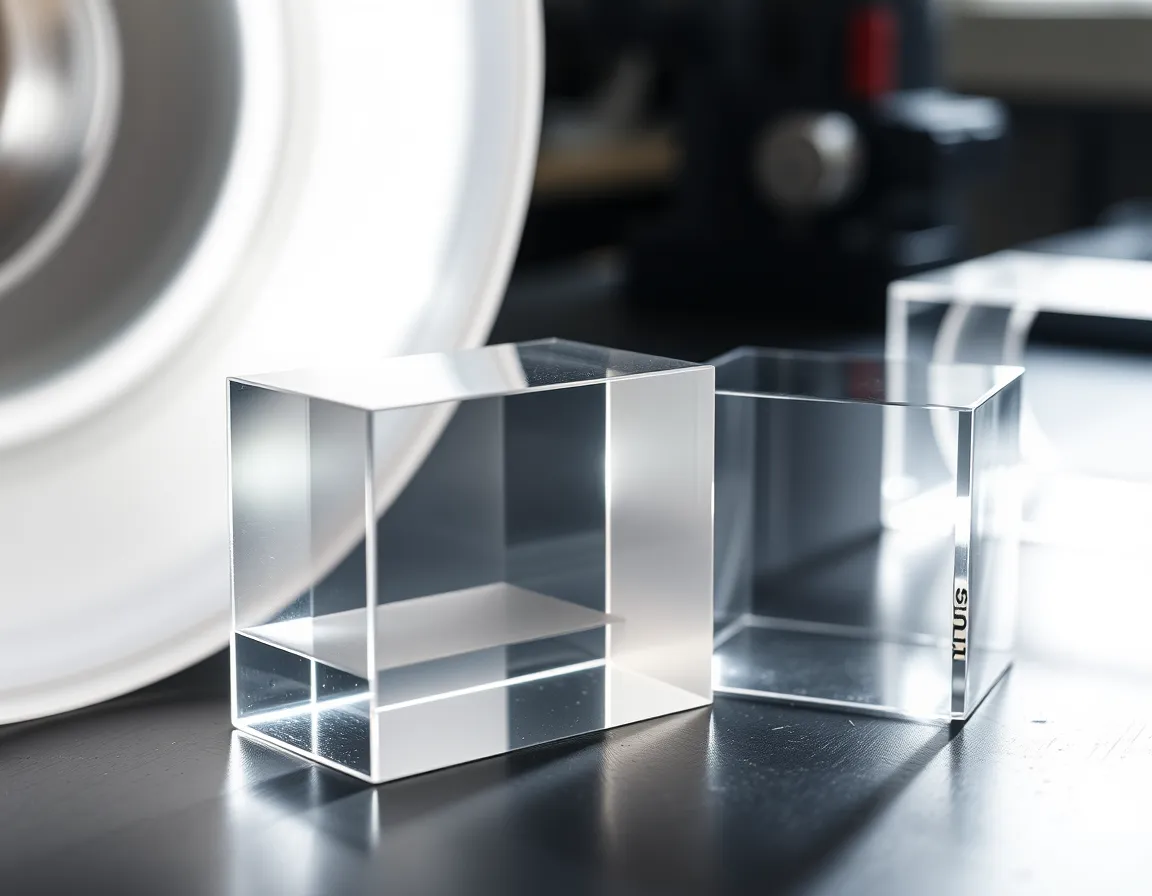
Wherever transparency outranks toughness. On our floor, machined PMMA becomes display and instrument windows, light pipes and light guides, camera and sensor windows, transparent structural models, lens and prism prototypes, and fluid-flow visualization blocks.
PMMA wins those jobs on three merits. Optical transmission sits above 90 percent with low haze — the best of the machinable clear plastics. Rigidity: acrylic is stiff for a polymer, so a 2 mm window stays flat where polycarbonate of the same thickness gradually sags. Weathering: PMMA holds clarity under UV for years, which is why it outlives most plastics outdoors.
The trade is brittleness. Where a part must survive impact, polycarbonate is the correct clear material; where it must be seen through for a decade, acrylic is.
A typical job on the bench: a product team needs a transparent flow-visualization block for an investor demo — internal serpentine channel, threaded ports, window faces polished clear. The closed internal channel routes to printing; the block body, ports and window seats machine in PMMA on the 3-axis platform, and the polish pass on the two marked faces turns the assembly into a window onto the fluid behavior. The report measures the port positions and window flatness the CFD model actually depends on. Clarity-critical, dimensionally honest, delivered inside the week — that is the standard machined-acrylic outcome.
How does PMMA machine on CNC platforms?
Acrylic machines beautifully when treated like the brittle, heat-sensitive glass-relative it is:
Tooling. Sharp, high-rake geometry with polished flutes keeps faces from heat-smearing; single-flute cutters shine on finishing passes.
Chip and finish. PMMA cuts clean and can machine to a near-polished surface directly — climb milling with fine stepdowns leaves translucent-to-clear faces.
Stress and crazing. Machining introduces little stress compared with solvent bonding, which is why machined windows craze less than glued assemblies; ask about annealing at quotation when dimensions demand it.
Tolerances. Rigidity makes ±0.05 mm comfortable; ±0.02 mm features are confirmed at quotation with metrology, and the report travels with the parts.
Turn-mill produces domes, cones and lens blanks; the CNC machining page lists the platforms in full.
Design notes for acrylic parts
Mounting, tightly. Brittle materials crack at point loads: use full-face gaskets, oversize holes with clearance, and avoid steel screws direct into tapped PMMA near edges.
Corner radii. Every inside corner is a crack starter in acrylic — radius generously wherever the drawing allows.
Thickness for windows. Flat windows 2 mm and up hold form; thin membranes below 1 mm flex and are better routes for our printing line.
Finishing callouts. Mark the clarity-critical faces on the drawing: as-machined translucent and flame- or hand-polished clear routes are quoted per surface.
Batch thinking. Acrylic machines fast; nesting multiple parts from sheet in one program is where unit cost drops — quantities are worth stating upfront.
Acrylic compared with clear alternatives
| Feature | Capability |
|---|---|
| Machined PMMA | Best clarity, rigid, UV-stable · Brittle; cracks at point load · CNC, in-house |
| Machined PC | Impact-tough clear · Tool marks; lower optical grade · CNC, in-house |
| Printed clear resin | Complex geometry in one piece · Layer texture; resin properties · SLA — clear-grade availability confirmed at quotation |
Rule of thumb: if the part is a window, choose acrylic; if it is a shield, choose PC; if it is a complex light-guide with internal channels, ask about printed options on the 3D printing line at quotation.
Frequently asked questions
Can machined acrylic come out optically clear? Yes, on marked faces: fine machining leaves a translucent finish, and polish routes take critical faces to clear. The finishing route is quoted per part with the machining.
Can you hold ±0.05 mm on lens profiles? Curved profiles machine within the standard class; tighter profile tolerances and surface specs are confirmed at quotation with metrology on the report.
Is acrylic suitable for outdoor use? PMMA is among the most UV-stable clear plastics and holds clarity outdoors for years — that is a core reason it dominates signage and glazing.
Acrylic or PC for a display window? Acrylic for clarity and scratch feel; PC where the window may be struck. Send the drawing and the engineer will recommend with reasoning in the quote. One more habit worth copying from optical shops: mark the optical axis and the critical faces on the drawing itself. Acrylic parts serve two masters — geometry and light — and the quote gets sharper when the drawing says which faces carry which duty. Acrylic also machines with almost no burr behavior worth mentioning — edges come off the machine crisp and stay crisp through light edge-breaking, which is why display and retail prototypes in PMMA look production-grade straight from the box. And because PMMA cuts fast and predictably, acrylic is the material where designers first discover how much a machined prototype can look like a finished product — clear faces, crisp engraving, sealed edges — at a price that lets the whole team hold the part before the tooling meeting.
Machining parameters and what to expect
| Feature | Capability |
|---|---|
| Tolerance class | ±0.05 mm standard · ±0.02 mm feature-level, metrology-confirmed |
| Surface finish | Translucent as-machined · Clear-polish route per marked face |
| Stock forms | Cast and extruded sheet, rod · Cast preferred for optical parts |
| Typical lead time | Confirmed at quotation · Quoted per order with DFM feedback |
Cast or extruded acrylic for my part? Cast machines to the best optical result and holds tolerance in thin sections; extruded is the economical route for simple windows. The quote recommends per geometry.
Can you machine internal channels in acrylic? Open channels and manifolds with tool access cut cleanly; fully-internal closed channels belong on the printing line — ask at quotation and we will route the part correctly. Can acrylic parts be solvent-bonded? PMMA bonds beautifully with the right solvent and technique; bonded assemblies carry crazing risk, so we quote machining-integrated designs and bond only where the drawing calls for it. How scratch-resistant is the polished face? PMMA polishes beautifully and scratches more easily than glass or PC; for handling-heavy windows, ask about face-treatment options at quotation.

Get a quote for machined acrylic parts
Send a STEP file or 2D drawing with quantities, and mark the faces where clarity matters. An engineer replies within 24 hours with the machining plan, the finishing route for optical faces, and the tolerances we will inspect to.
One-stop prototype & low-volume build · Inspection report with every part · Quote in 24 h