



LSR Liquid Silicone Rubber Molding
Liquid Silicone Rubber Molding (LSR) for Prototype and NPI Builds
Quick answer
Arterki molds LSR liquid silicone parts in Shore A 20–60 to ISO 3302-1 class M2 typical; tooling in 7–12 business days, parts 5–8 business days after sample approval; engineer DFM review; an inspection report ships with every order.
When a silicone part is thin-walled, optically clear, or geometrically complex, liquid silicone rubber (LSR) molding is the process that gets it built. Arterki runs LSR injection in-house — material feed, metering and mixing through to molded parts and inspection report — so the process decision stays an engineering call. Send your drawing and an engineer replies within 24 hours with a quote and tooling schedule.
Liquid silicone rubber (LSR) molding injects two liquid components into a heated tool, where the material cures fast. Arterki molds LSR parts in Shore A 20–60 to ISO 3302-1 M2 class typical, with tooling in 7–12 working days and parts 5–8 working days after sample approval.
Arterki molds LSR by injection on a unit with full material feed, metering and mixing; your durometer, tolerance class, MOQ and lead times are stated in the quote, and an inspection report ships with every order.
Every part ships with an inspection report. For LSR parts that means the critical dimensions on your drawing are measured against the ISO 3302-1 M2 class we quote to, and visual quality is checked before packing. The report travels with the parts.
What LSR is, and what the injection line adds
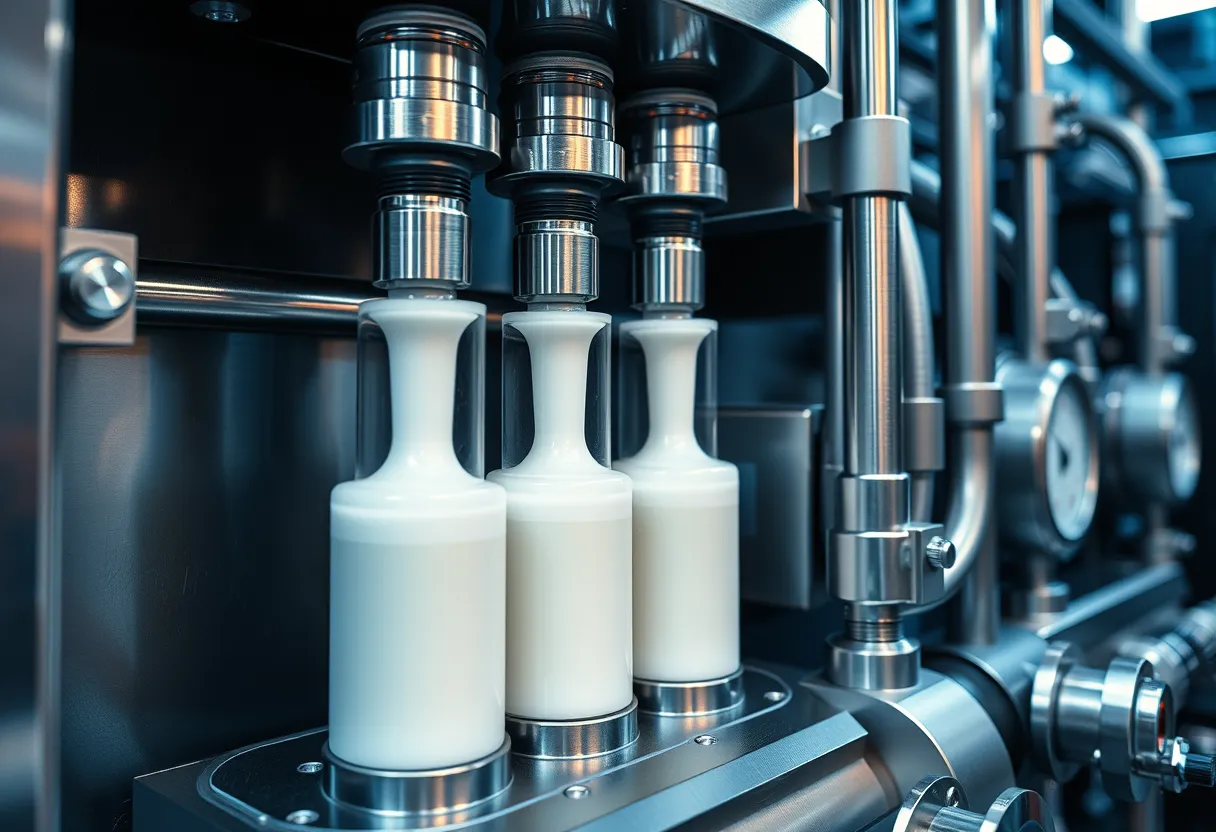
LSR starts as a pumpable, two-component liquid. At the machine, the two components are metered to a fixed ratio, brought together through a static mixer, and injected into the heated tool. Heat cures the part quickly, and the next shot is metered exactly the way the last one was.
That closed, metered flow is what changes the design space. Thin sections fill because the material is injected under pressure into a heated tool. Clear grades stay clear because the closed feed system protects the material end to end. Consistency improves because dosing is a machine setting.
Transparent LSR parts, molded in a closed feed system.
LSR vs compression-molded silicone: Compression molding, common at general silicone shops, presses a hand-loaded preform of millable gum and remains the simpler route for blocky gaskets, keypads and damping pads. LSR is metered, mixed and injected into a heated tool, which suits thin walls, complex geometry, transparent grades and shot-to-shot consistency. Arterki's silicone line is LSR injection; if your part would be better served by compression molding, the quote says so.
How an LSR order runs
Before any of the steps below, the tool is built for your geometry — 7–12 working days — and a first-article sample is signed off before the production run.
Thin-wall parts demolding from a heated LSR tool.
Metering and mixing. The two LSR components are pumped from their kits, metered at the set ratio, and combined through a static mixer.
Injection. The mixed material is injected into the heated tool, filling thin sections and fine features.
Curing. Tool temperature cures the part; the cure window is set per part and grade.
Demolding. Parts come out cured and stable enough to handle.
Post-cure. Parts are post-cured in an oven to stabilize the material before any measurement is taken.
Deflash and inspection. Flash is removed in-house; the critical dimensions on your drawing are measured and recorded; visual quality is checked before packing.
Production ships 5–8 working days after sample approval; MOQ is ≈50 pieces, set by the tool's cavity count and stated in your quote.
What engineers mold in LSR
Thin-wall seals and gaskets — complex cross-sections and thin flanges that suit injection filling.
Diaphragms for pumps, valves and regulators — thin, consistent sections where shot-to-shot repeatability is what the test measures.
Transparent parts — clear covers, windows and light-guiding features. Clear grades are quoted on inquiry; the closed feed system is what protects clarity.
Food-contact applications — food-contact material grades are available on inquiry. State the end use at quotation and we will confirm the compound — and whether material documentation is available for it — at quotation.
If the same assembly also needs plastics or metal, our rapid-tooling injection molding covers plastic validation batches, metal injection molding covers small metal component pilots, and the parts can ship consolidated with your CNC-machined components.
LSR molding specifications
| Feature | Capability |
|---|---|
| Process | Liquid injection molding (LIM) of LSR |
| Equipment | LSR injection unit with feed, metering and mixing system |
| Material hardness | Shore A 20–60, typical LSR grades |
| Other durometers | On inquiry |
| Thin-wall / complex / transparent parts | Quoted on inquiry — send the drawing |
| Tolerance | ISO 3302-1 M2 class, typical |
| Minimum order | ≈50 pieces, set by the tool's cavity count |
| Tooling lead time | 7–12 working days |
| Production lead time | 5–8 working days after sample approval |
| Food-contact grades | On inquiry (material grade) |
| Inspection | Dimensional and visual; report in every shipment |
As with every line on this page — if a parameter is unlisted, treat it as a quotation conversation: name the requirement and we confirm what we can support in writing. Arterki is a prototype and NPI shop — LSR here is rapid tooling and process validation, quoted per project, and we will tell you at quotation if a volume or requirement belongs somewhere else.
Questions engineers ask
Can you mold transparent LSR parts?
Yes — transparent grades are quoted on inquiry. The injection line keeps the material in a closed system from kit to tool, which is what protects clarity. Tell us where the part is visible and what clarity expectations you have, and we confirm the grade and its documentation at quotation.
Do you offer food-grade LSR?
Food-contact material grades are available on inquiry. State the end use at quotation; we confirm the compound at quotation, and material documentation is available on request where the compound supplier provides it. Requirements beyond the material grade are assessed case by case at quotation — name the application and we confirm what we can support before tooling starts.
How long does an LSR mold last?
Tool life depends on geometry, grade and cavity count. At quotation we state what the tool is designed to deliver for your program, and mold ownership and repeat-batch reservation terms are written into the same quotation.
Which Shore A hardness should I choose for LSR?
Standard LSR grades run Shore A 20–60. Softer grades around Shore A 20–30 seal on uneven surfaces and conform easily; 40–50 is the common ground for diaphragms and general seals; 60 suits firmer parts that see handling. Name the function on the drawing and we will propose a grade with the quote; grades outside the standard range are a quotation conversation.
What's in your inspection report: measured critical dimensions against the quoted ISO 3302-1 M2 class, plus flash and visual condition — for the parts in your shipment.

Get a quote for your LSR parts
Send a STEP file or 2D drawing with durometer, quantities, the dimensions you consider critical, and any clarity or food-contact requirement. An engineer replies within 24 hours with DFM feedback, a tooling and production schedule, and the tolerance class we will inspect to.
One-stop prototype & low-volume build · Inspection report with every part · Quote in 24 h