



PLA 3D Printing: The Fast Lane from Idea to Part-in-Hand
PLA is the material of the first draft. It prints crisply, holds detail, costs little and arrives fast — which is why the first physical version of almost every enclosure, jig and concept model on our floor starts as PLA. Every shipment carries a dimensional inspection report for the features you mark critical.
Quick answer: Arterki prints PLA on engineering FDM platforms for concept models, form-fit checks and jigs. Quotes within 24 hours, lead time confirmed at quotation, inspection report with every shipment.
PLA at Arterki: Printed on the engineering FDM line in stocked colors. Best-in-class surface detail for a printed plastic at this speed and cost. DFM review before every build; inspection report in every box.
What is printed PLA used for?
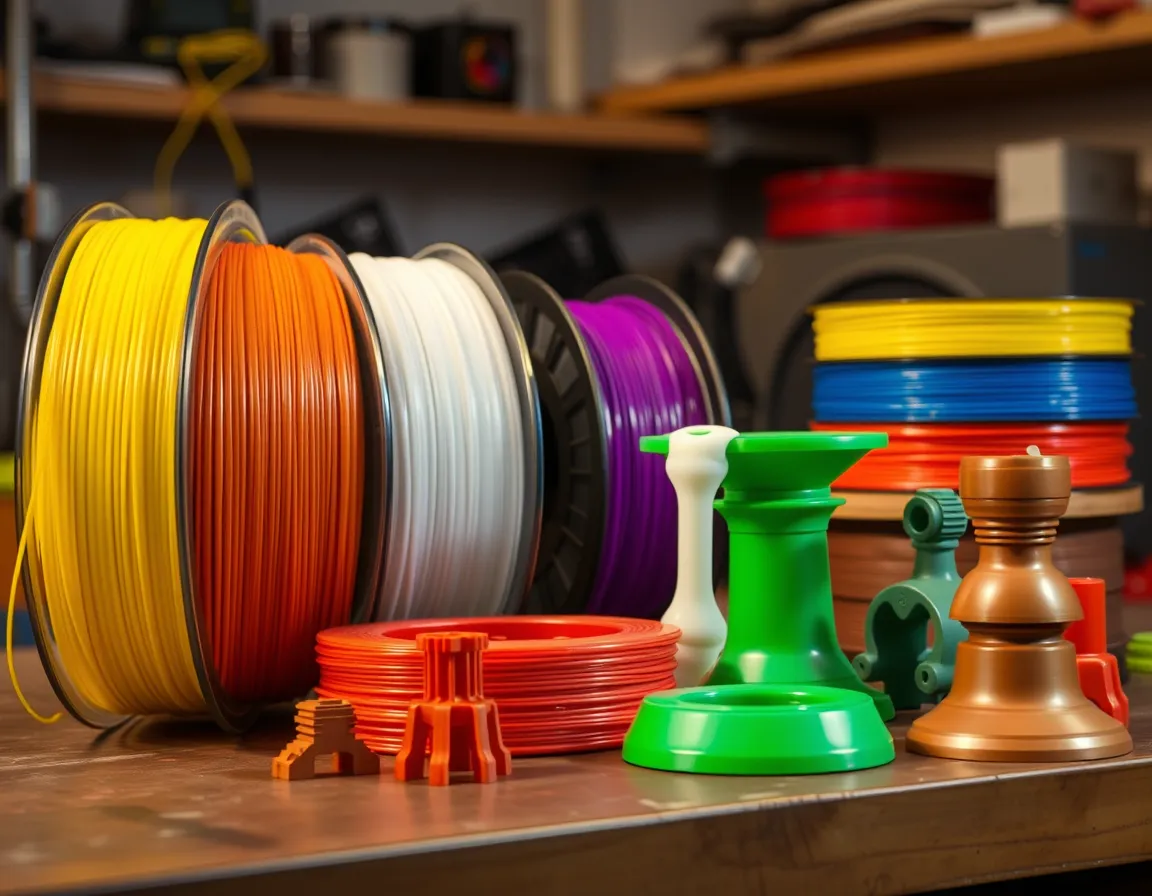
The first 90 percent of a design's life — concept models, styling reviews, form-and-fit checks, assembly mockups, masters for molding discussions, jigs and marking fixtures, and packaging fit trials. When the question is "does it look right and go together," PLA answers fastest.
Three properties earn that role. Detail: PLA prints with crisp edges and clean surfaces — the best surface fidelity of the common FDM materials. Stability: it prints with minimal warp, so large flat panels come off the plate true. Economics: among printed plastics it keeps unit cost lowest, which is what an iteration budget wants.
The limit is environmental: PLA softens at modest temperatures, creeps under sustained load and lives its best life indoors. The moment a part faces a hot car, a loaded latch or a snap that must survive cycling, the design graduates — to ABS on the same machines, to nylon PA12 on the SLS line, or to machined plastics for precision. The full decision table lives in our ABS vs PLA guide.
How does PLA print on our platforms?
PLA is the most forgiving FDM material, and the discipline is in the details:
Surface quality. Moderate speeds with tuned cooling give PLA its signature finish — visible layers under raking light, but clean enough that concept models photograph well straight off the plate.
Dimensional behavior. Low shrink means large parts hold shape without heated enclosures; process tolerance is confirmed per drawing at quotation.
Colors and finish. Stocked colors cover the common range; cosmetic faces are marked on the drawing and the build orients them to the cleanest surfaces.
Speed economics. Single parts run fast; the quote prices singles and small batches honestly, which is why PLA dominates the iterate-today loop.
Platform details live on the 3D printing page.
Design notes for PLA parts
Design for the process. FDM geometry rules apply: support-facing overhangs minimized, holes reamed to size, thin walls kept at or above the process minimum.
Iterate in pairs. The affordable move is printing two of everything critical — one to assemble, one to sacrifice to the drop test that tells you whether the next round needs ABS.
Avoid living hinges. PLA flexes a few times and remembers; hinge features belong to TPU or nylon from the start.
Heat awareness. A PLA part left on a dashboard or near a warm power supply will deform — the DFM feedback flags geometry whose use environment suggests that risk.
Threads and inserts. Heat-set inserts give PLA assemblies real screw-holding; cut threads in PLA survive light service only.
PLA compared with printed alternatives
| Feature | Capability |
|---|---|
| Printed PLA | Detail, stability, cost, speed · Low temperature ceiling; brittle-ish under flex · Engineering FDM, in-house |
| Printed ABS | Heat and impact tolerance · Warps more; rougher surfaces · FDM line, in-house |
| SLS nylon PA12 | Functional toughness, batch economics · Granular surface; tolerance confirmed in your quote · SLS, in-house |
| Machined PC | Precision transparent parts · Cost per part; geometry limits · CNC line |
Shortcut: looks-and-fits, PLA; survives-and-works, ABS or nylon; measures-precisely, machining.
Frequently asked questions
Is PLA food-safe for cups or cookie cutters? Food-contact safety is a certification question rather than a material fact — printed surfaces and food-contact compliance are handled per project at quotation, with the honest answer depending on use, cleaning and grade paperwork.
Can PLA parts be painted or finished? Yes — PLA sands and primes beautifully, which is why styling models prefer it; finishing routes are quoted per part.
How big can a PLA part print? Within the FDM platform envelope; large flat panels print true thanks to PLA's low warp, and the quote confirms per-geometry capability.
When should I skip PLA entirely? When the part carries load, sees heat, or must flex — going straight to ABS, nylon or TPU saves an iteration, and the DFM feedback will say so on the first quote.
Print parameters and what to expect
| Feature | Capability |
|---|---|
| Process | Engineering FDM · Crisp detail, low warp |
| Tolerance class | Confirmed per drawing in your quote |
| Surface | Clean matte, photographs well · Cosmetic faces oriented in build |
| Typical lead time | Confirmed at quotation · Quoted per order with DFM feedback |
The everyday PLA story on our floor: a team walks in with a styling question and walks out with parts in hand the same week — an enclosure family, three colorways, one afternoon of photography for the review deck. The dimensions that mattered (button bores, port positions) sit on the inspection report, so the review argues about the design, never about whether the print is faithful. When the review locks, the same files quote forward into ABS, nylon or machined finishes without a redraw. Fast, cheap, honest parts that de-risk every later step — that is the whole PLA proposition.
Can PLA parts be glued? Yes — PLA bonds well with the right adhesives, which is why multi-part concept assemblies print as panels and go together with cement; the bond lines are marked cosmetic on request.
Does PLA come in translucent or specialty filaments? The stocked color range covers common needs; specialty appearances are handled per project at quotation rather than promised from a generic shelf. PLA or SLA resin for a show model? PLA wins on toughness and cost; SLA resin wins on microscopic surface detail. For a review-deck model that will also be handled, PLA is the safer default — the quote compares both when the drawing is cosmetic-critical. One more PLA truth: because it prints so predictably, it is the material where the 24-hour quote cycle feels fastest — files in the evening, a quote back within 24 hours, and the lead time confirmed in that quote. Can PLA jigs hold tolerances for marking fixtures? For marking and light assembly duties, yes — the process class holds feature positions well on stable geometry, and the report measures the locating features you mark so the jig is trusted from its first use. How thin can PLA walls print? The FDM process minimum governs — functional walls sit comfortably above it, and thin cosmetic fins are flagged in DFM feedback with what the process can hold on your geometry.

Get a quote for PLA parts
Send a STEP file with quantities and the dimensions you consider critical. An engineer replies within 24 hours with the build plan and — if the drawing suggests the part will outgrow PLA — the upgrade recommendation with reasoning in the quote.
One-stop prototype & low-volume build · Inspection report with every part · Quote in 24 h