



TPU 3D Printing: Flexible Parts That Actually Flex
Thermoplastic polyurethane is the material a design calls for when a part has to bend, seal, damp or grip — and stay that way through repeated cycles. We print TPU on our industrial lines, and every shipment carries a dimensional inspection report for the features you mark critical.
Quick answer: Arterki prints TPU parts on engineering FDM platforms, with SLS-grade TPU quoted for powder-bed geometry. Quotes within 24 hours, engineer DFM review before the build, and an inspection report with every shipment.
TPU at Arterki: Printed on the engineering FDM line; SLS-grade TPU quoted per project for complex elastomer geometry. Flexible durometers cover sleeves, seals, dampers and grips. DFM review before every build; inspection report in every box.
What is printed TPU used for?
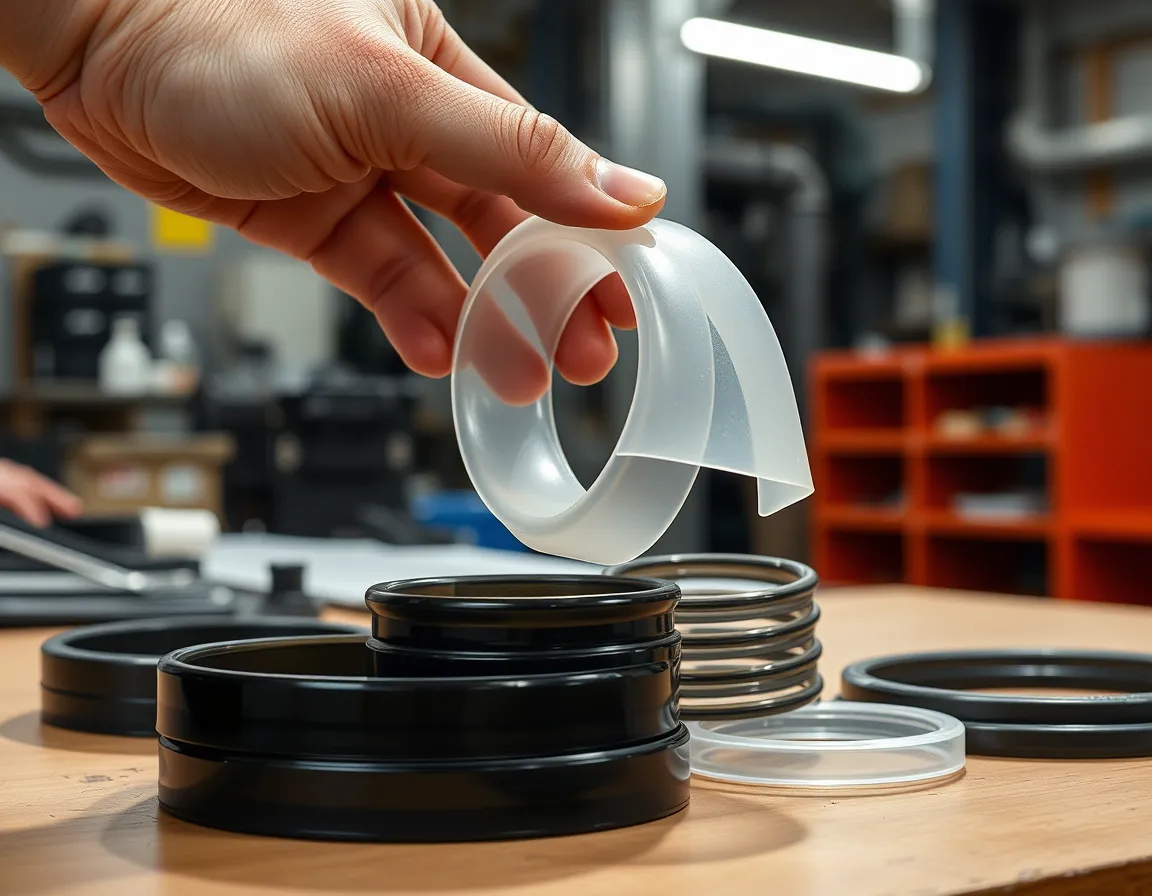
Wherever a mechanism needs a rubbery behavior from a printable material. On our floor, TPU parts show up as flexible couplings and dust boots, bumpers and feet, grip sleeves and overmold-style handles, gaskets and light-duty seals, cable strain reliefs, living hinges that actually live, and vibration dampers between metal components.
The property behind that list is elastic recovery: TPU stretches under load and returns, cycle after cycle, where stiffer prints would take a set or crack. Printed in the right wall and infill strategy, a TPU sleeve behaves like the molded elastomer it stands in for — which is exactly its job in a prototype phase: validate the flexible interface before silicone or molded-elastomer tooling exists.
The boundary line is thermal and chemical exposure. For hot environments or aggressive fluids, the conversation moves to our LSR liquid silicone molding line, whose parts tolerate wider conditions — the comparison section below draws that line.
How does TPU print on our platforms?
Flexible filaments reward experience, and the habits are known:
FDM pathing. TPU prints at moderated speeds with tuned retraction; the result is flexible parts with consistent walls — sleeves, boots and grips are the sweet spot of the process.
Infill as a spring. On FDM, infill percentage is a design variable: lower infill gives softer compliance, higher infill gives durable structural flex. Mark the target feel on the drawing and the build plan honors it.
SLS-grade TPU. For complex geometry — internal channels, lattice structures, sealed convolutions — powder-bed TPU is quoted per project; the process builds flexible parts with no support scars and full freedom of internal shape.
Batch logic. FDM suits singles and small runs; SLS batches nest economically when a design needs dozens of identical flexures.
Platform details for both lines live on the 3D printing page.
Design notes for TPU parts
Wall thickness sets stiffness. In flexible materials, wall and infill replace durometer as the tuning knobs — a 1.5 mm wall flexes very differently from 2.5 mm, so call out the functional feel.
Transitions to rigid parts. A flexible sleeve gripping a rigid component needs a mechanical capture — a lip, a groove — because friction alone relaxes over time; design the capture into the mating part.
Hinges and folds. TPU living hinges outlast rigid-plastic hinges; give them a constant cross-section and let the material do the work.
Tolerances on flexible parts. Dimensional inspection on elastomers measures the functional features — bore IDs over rigid gauges, overall lengths — and the report reflects what you mark measurable.
Seal interfaces. For gasket duties, specify the compression target rather than a hard thickness tolerance; the quote comes back with the wall plan that hits it.
TPU compared with flexible alternatives
| Feature | Capability |
|---|---|
| Printed TPU (FDM) | Tough elastic parts, fast, tunable compliance · Layer-bonded; cosmetic layer texture · Engineering FDM, in-house |
| SLS-grade TPU | Complex flexible geometry, batch nesting · Quoted per project · SLS line, on inquiry |
| Nylon PA12 | Fatigue-tough semi-flex, dimensional · Not a true elastomer · SLS, in-house |
| LSR silicone | Temperature and chemical range, true rubber feel · Tooling and MOQ commit · LSR molding, in-house |
| Machined plastics | Rigid precision · Zero elasticity · CNC line |
The shortcut: bend-and-return goes to TPU; snap-and-return can stay nylon; hot-fluid sealing graduates to LSR.
Frequently asked questions
How hard is printed TPU? Shore hardness depends on the specific filament grade stocked for the build; the target feel belongs on the drawing, and the quote confirms the grade and the wall plan that delivers it.
Can TPU parts seal air or water? Light-duty gasket and boot duties yes — printed walls seal against smooth flanges under compression. Pressure-bearing seals move to LSR at quotation.
Does TPU print in color? Common filament colors are available on the FDM line; cosmetic-critical parts should mark the visible faces, and the build orients accordingly.
When does printed TPU move to LSR or molding? When volumes justify tooling, when temperatures exceed what TPU tolerates, or when the part needs true rubber compression behavior — the quote flags the crossover when the drawing suggests it.
Print parameters and what to expect
| Feature | Capability |
|---|---|
| Process | Engineering FDM standard · SLS-grade TPU quoted per project |
| Compliance tuning | Wall + infill plan · Target feel set on the drawing |
| Surface | Matte flexible walls · Cosmetic faces marked and oriented |
| Typical lead time | Confirmed at quotation · Quoted per order with DFM feedback |
A representative rhythm: a team sends a wrist-worn device shell with a TPU bumper and a rigid frame — two materials, one assembly. The bumper drawing marks the feel and the capture lip; the quote returns with the wall plan that hits it; parts arrive with the report measuring the bore and the capture groove the assembly actually depends on. The device survives its drop test the same week, and the bumper design graduates toward LSR tooling with its geometry already proven. That is the everyday job of printed TPU: prove the flexible interface now, tool it later.
Can TPU parts be threaded or reamed? Light-duty threads cut acceptably in thicker walls; for anything loaded, design a capture for a metal insert instead — the DFM feedback marks those bores on the first pass.
How does TPU age? Polyurethane elastomers hold their properties for years in normal indoor service; UV-heavy exposure and hot-fluid contact are the cases where the quote routes the part to LSR instead. SLS TPU versus FDM TPU — how do I choose? Geometry decides: sleeves and boots with line-of-sight walls print fine on FDM, while sealed convolutions, internal channels and lattice cushions need powder-bed — send the file and the route recommendation comes back in the quote with the reasoning shown. A habit worth stealing from elastomer engineers: specify the failure mode you can accept. A sleeve that must tear cleanly at 200 N is a different wall plan from one that must survive 500 N forever — drawings that state the mission get builds that deliver it. What colors does SLS TPU come in? Powder-bed TPU parts finish in the material's natural flexible grey-white; color on SLS-grade elastomers is a quoting-stage question rather than a shelf promise — FDM remains the color route for flexible parts.

Get a quote for TPU parts
Send a STEP file with quantities, the functional feel you need — sleeve stiffness, seal compression, grip durometer — and the dimensions that matter. An engineer replies within 24 hours with the process route, the wall plan, and the features we will measure on the report.
One-stop prototype & low-volume build · Inspection report with every part · Quote in 24 h