



POM (Acetal) CNC Machining: The Low-Friction Workhorse
When a mechanism has to slide, click or turn for a long service life without grease and without a metal budget, the part is usually POM. We machine acetal on 3- and 5-axis platforms alongside the engineering metals, and every batch ships with a dimensional inspection report against your critical dimensions.
Quick answer: Arterki CNC machines POM/acetal to ±0.05 mm standard tolerance (±0.02 mm on request, metrology-confirmed) for prototype and low-volume runs. Lead time confirmed at quotation, quotes within 24 hours, inspection report with every shipment.
POM at Arterki: Machined in-house on 3- and 5-axis platforms with turn-mill for round features. ±0.05 mm standard. Engineer DFM review before machining; inspection report in every box.
What is POM acetal used for in machining?
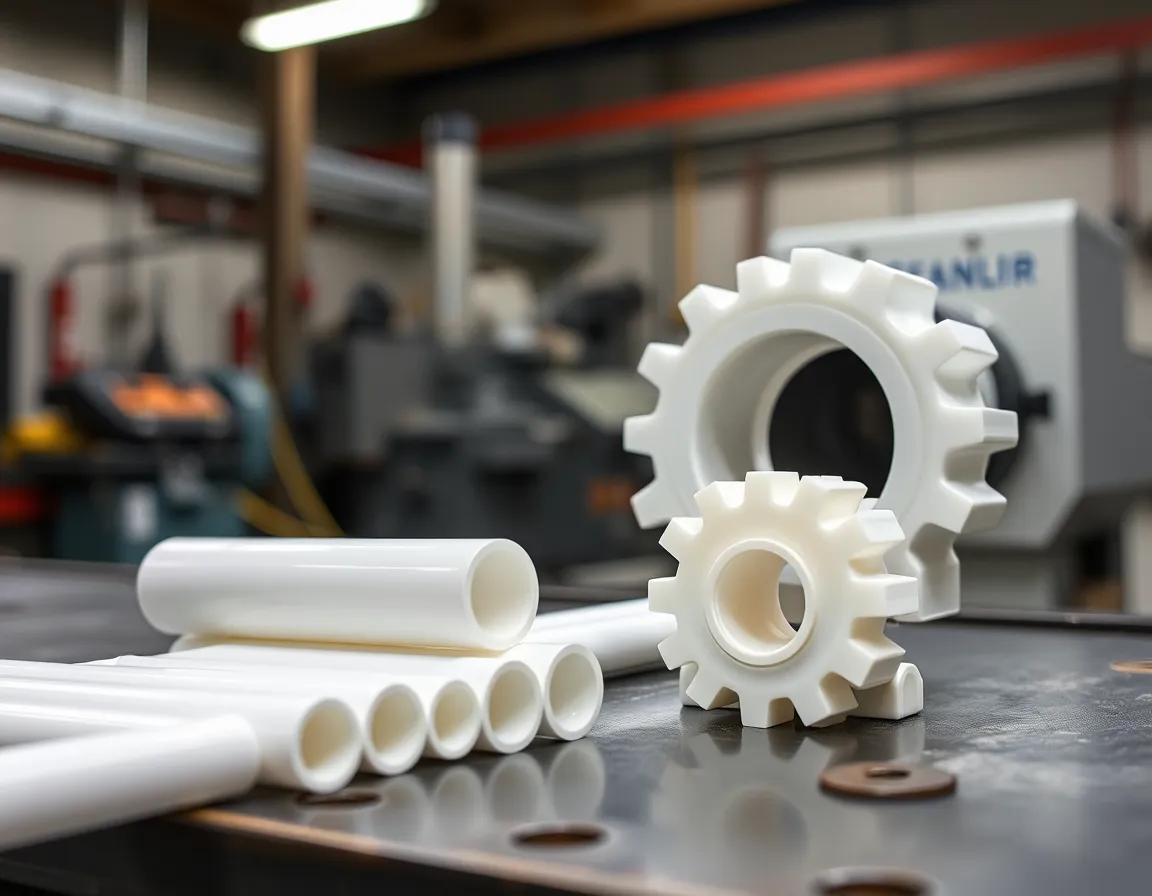
POM earns its slot on precision mechanisms. On our floor, machined acetal shows up as gears and gear racks, bushings and slide rails, latch and snap mechanisms, valve bodies and seals, fixture components, and jigs that must not mark the parts they hold.
Three properties drive that list. First, low friction and wear: acetal-on-acetal and acetal-on-metal pairs run smooth without lubrication, which is why gear trains in cheap printers and expensive cars both use it. Second, dimensional stability: POM barely absorbs water, so a bushing machined today measures the same in a humid August — where nylon moves, acetal holds. Third, stiffness: it resists creep under sustained load better than most commodity plastics, keeping spring features and press-fits functional over real product life.
For static housings, ABS machines cheaper; for moving mechanisms, POM is usually the correct default.
A representative rhythm on our floor: a mechanism team sends a drawing set with a Geneva driver, two bushings and a ratchet — three parts, one material, one assembly. The quote returns with the gear pitch and bushing bores flagged as the measured features; parts arrive with the report confirming them; the mechanism cycles on the bench the same afternoon. No tooling, no minimum order beyond the parts themselves, and the dimensional chain held because acetal neither moved after machining nor crept under the first weeks of testing. That iteration loop — draw, quote in 24 hours, machine, measure, assemble — is exactly what machined POM is for.
How does POM machine on CNC platforms?
Acetal is one of the most machinable plastics on the bench, and its habits reward planning:
Chip formation. POM cuts to a clean, crumbly chip that clears easily — high feeds with sharp tooling give glassy faces without gumming.
Thermal behavior. It moves with heat more than metals, so finish passes on precision features run with consistent speeds and minimal dwell; long thin parts get supported to stay straight.
Tolerance class. Stability makes ±0.05 mm comfortable; ±0.02 mm on bearing fits and gear pitch circles is confirmed at quotation with metrology on the report.
Round features. Turn-mill covers shafts, bushings and pulley profiles in one setup, keeping concentricity in-family.
The full platform list — 3-axis, 5-axis and turn-mill — is on the CNC machining page.
Design notes for POM parts
Wall uniformity. As with most plastics, uniform walls machine flatter; thick pads on thin webs distort as stresses rebalance.
Snap geometry. Acetal springs well — design snap hooks with a generous root radius and expect them to survive cycling that would fatigue ABS.
Tolerance placement. Put ±0.05 mm only where the mechanism needs it; mark those features and the inspection report measures exactly them.
Joining. POM shrugs off adhesives and solvents — plan mechanical fastening or snap fits into the design from the start.
Creep-aware press fits. Press-fit metal inserts hold well; direct metal-on-POM press pins relax over months, so spec retention geometry rather than interference alone.
POM compared with other mechanism plastics
| Feature | Capability |
|---|---|
| Machined POM | Low friction, dimensionally dry-stable, stiff · Opaque; adhesive-hostile · CNC, in-house |
| Nylon PA12 | Tough, flexible fatigue life, printed geometry freedom · Absorbs moisture and moves · SLS printing, in-house |
| Machined ABS | Cheapest housing plastic · Poor bearing behavior · CNC + FDM routes |
| PTFE-class polymers | Lowest friction of all · Soft, creeps, pricey · On inquiry at quotation |
| Molded POM | Unit cost at volume · Tooling and MOQ commit · Grades confirmed at quotation |
The selection shortcut: if it slides and must stay dry-stable, POM; if it flexes and must absorb abuse, nylon; if it just encloses, ABS.
Frequently asked questions
Can you cut gear teeth in POM at ±0.05 mm? Yes — involute and straight-tooth profiles machine within our standard class, with pitch and runout measured on the inspection report for the features you mark.
Does POM warp after machining? Minimal. Acetal's moisture uptake is negligible; dimensional movement after machining is a fraction of what nylon shows, which is why we hold fine bearing fits in it.
Can POM parts run against stainless steel? Yes — acetal-on-metal is a standard dry-running pair for bushings and slides; stainless shafts against POM bearings run in consumer and industrial mechanisms alike.
When does machined POM move to molding? At stable volumes. Machining covers iteration and low-volume builds with zero tooling; molded acetal grades are confirmed at quotation once the design locks. The inspection angle matters more than teams expect on acetal: because the material is so dimensionally quiet, measured features on the report read like the drawing — which makes it the ideal material for calibration masters and check fixtures whose whole job is defining where 'correct' sits. Acetal also stays quiet in wet test rigs and cleaning-heavy environments where hygroscopic plastics swell and bind — a property teams discover the first time a nylon fixture jams after a washdown and the POM one beside it does not. That reliability under humidity is the quiet half of POM's reputation.
Machining parameters and what to expect
| Feature | Capability |
|---|---|
| Tolerance class | ±0.05 mm standard · ±0.02 mm on fits, metrology-confirmed |
| Surface finish | Smooth, low-tool-mark · Excellent as-machined bearing faces |
| Stock forms | Rod, plate · Rod preferred for bushings and gears |
| Typical lead time | Confirmed at quotation · Quoted per order with DFM feedback |
Is Delrin the same as POM? Delrin is a brand of acetal (POM homopolymer); we quote acetal stock per project and confirm the grade in the quote — functionally the two names point at the same machine-shop material.
Can you machine long guide rails straight in POM? Yes, with support and stress-managed passes; straightness on long rails is confirmed at quotation and measured on the report where you mark it critical. Can you machine POM in colors? Natural white is the standard stock; colored acetal and black grades are quoted per project, with the grade confirmed in the quote so prototype and production match. What quantity makes sense for machined POM? Singles to hundreds. Gears and bushings machine economically across that whole band because acetal cuts fast and nests well from rod and plate — the quote prices the batch honestly either way.

Get a quote for machined POM parts
Send a STEP file or 2D drawing with quantities and the dimensions you consider critical — gear pitch circles, bearing bores, slot widths. An engineer replies within 24 hours with DFM feedback and the tolerance plan we will inspect to.
One-stop prototype & low-volume build · Inspection report with every part · Quote in 24 h